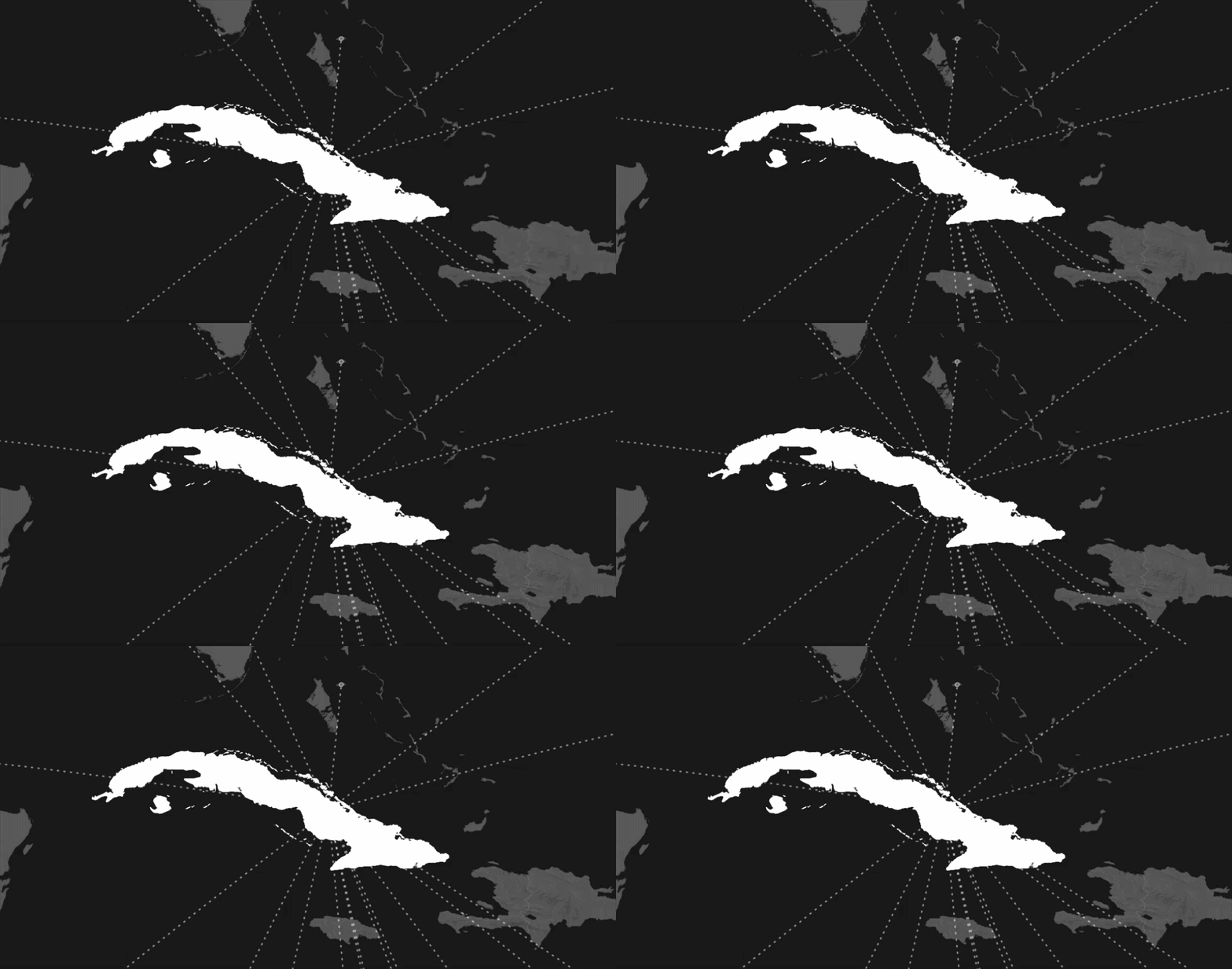
An unprecedented emigration wave has emptied Cuba of up to a quarter of its population since 2020. The demographic fallout will reverberate for decades to come, affecting any future recovery or political transition.
An interactive map of the New York Times' Metropolitan Diary placed where they happened, 1976–2026.
A guide to creating scrollytelling stories including when the format is worth using, and the different techniques for pulling it off.
Food has increasingly become a tool of war, triggering humanitarian devastation and disrupting global food supplies. International authorities appear incapable of responding.
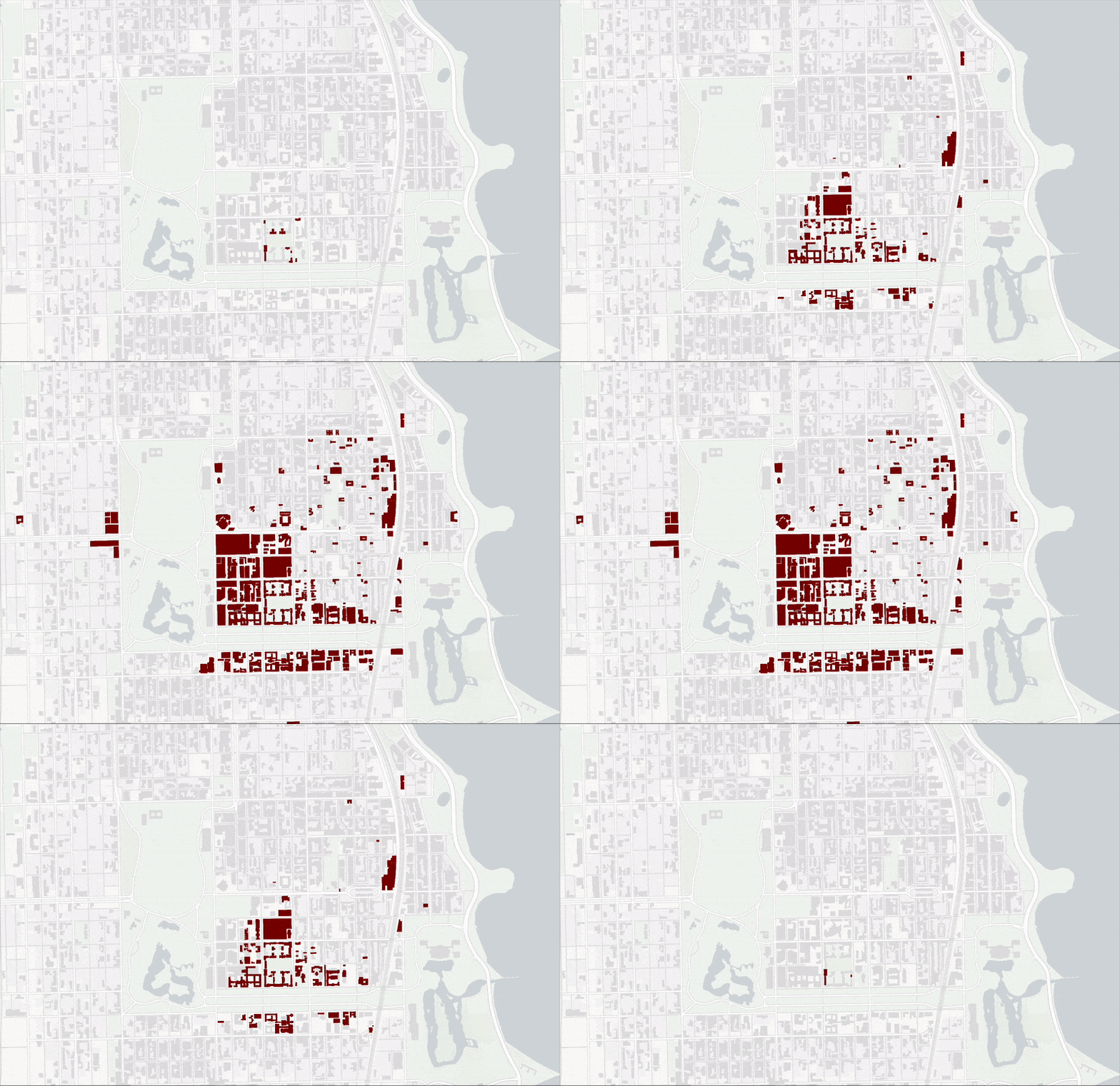
Drawing from University archives, campus maps, academic literature, and news clippings, the Maroon charted the University's contentious property acquisitions from its charter in 1890 to the present. Featured on the front page of Hacker News and r/Chicago.
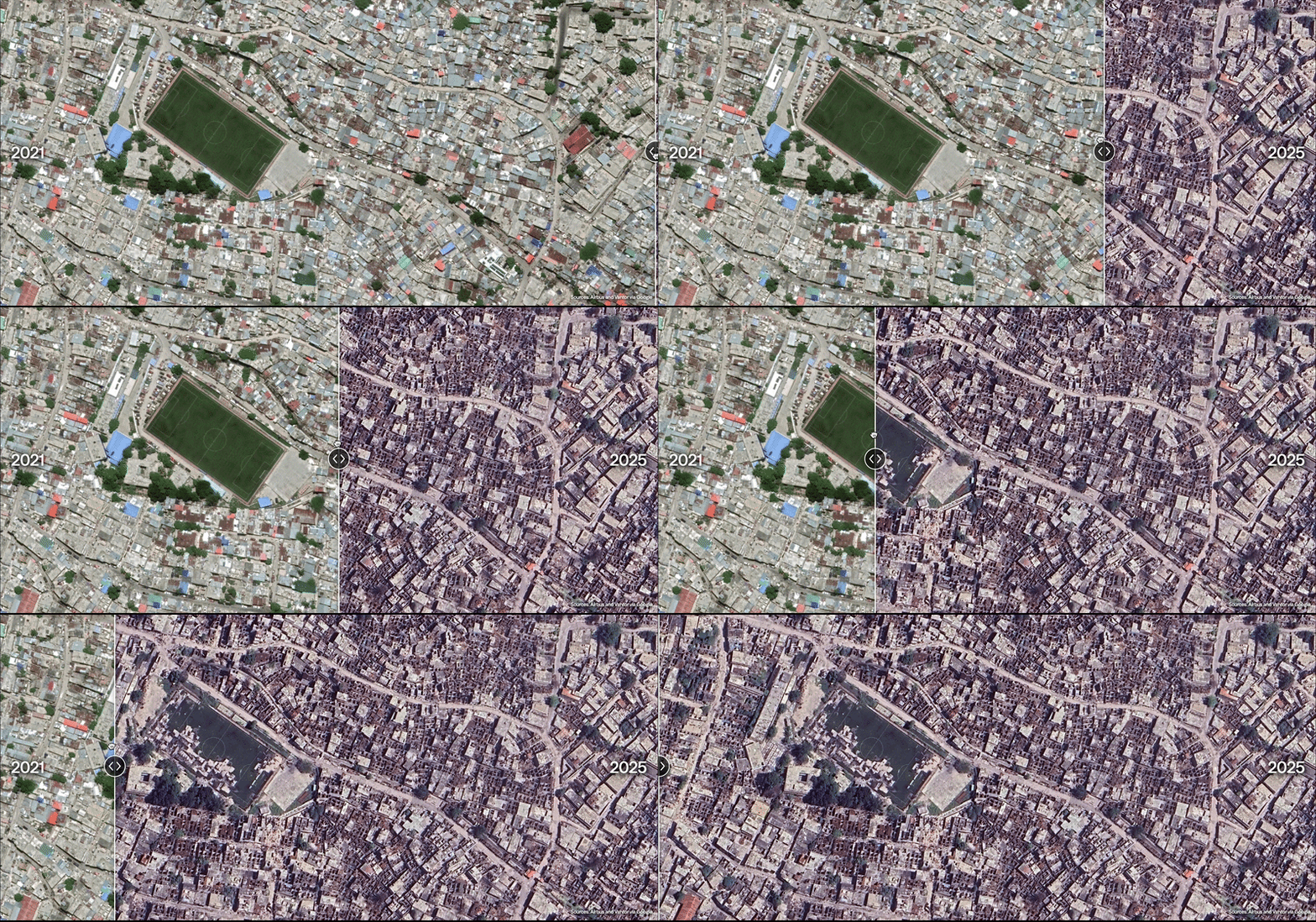
Gang warfare, hunger, and a disintegrating health-care chain has hollowed out Haiti’s capital, Port-au-Prince. Seven hundred miles away, the U.S. government has revoked TPS, a humanitarian immigration status used by Haitians since the devastating earthquake in 2010. Up to 350,000 Haitian migrants could now be deported to a country beset by violence.
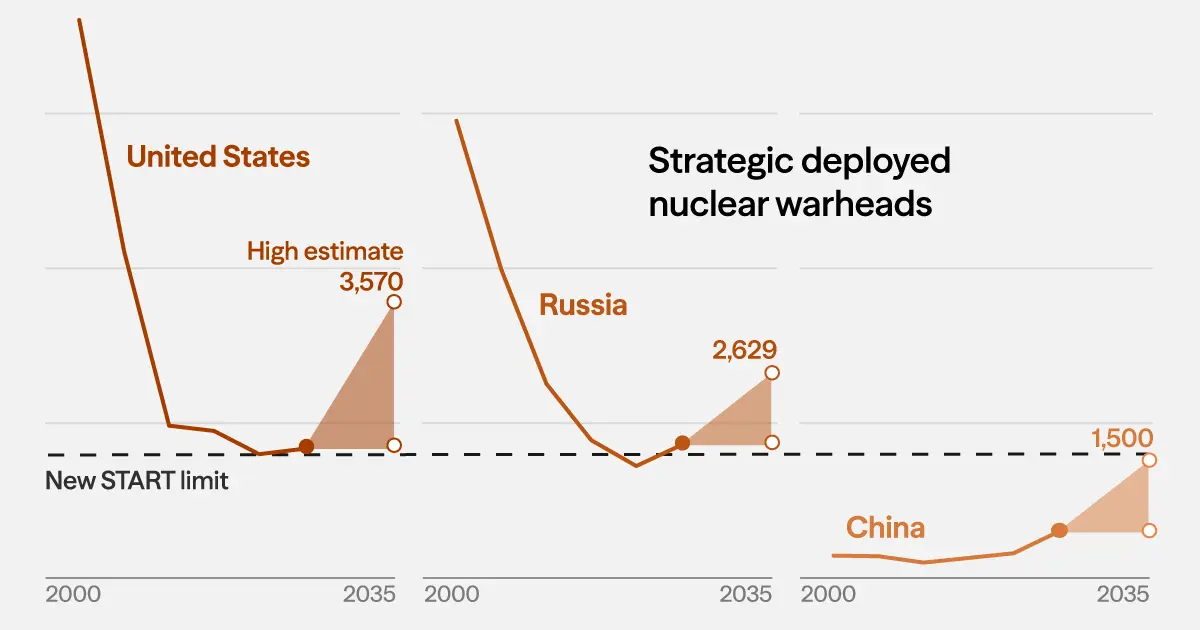
What trends are Council on Foreign Relations foreign policy experts watching in 2026? Read about the race for critical minerals, the possible end of arms control, and the rise of the ‘Electrostate’ (plus some visuals I contributed).
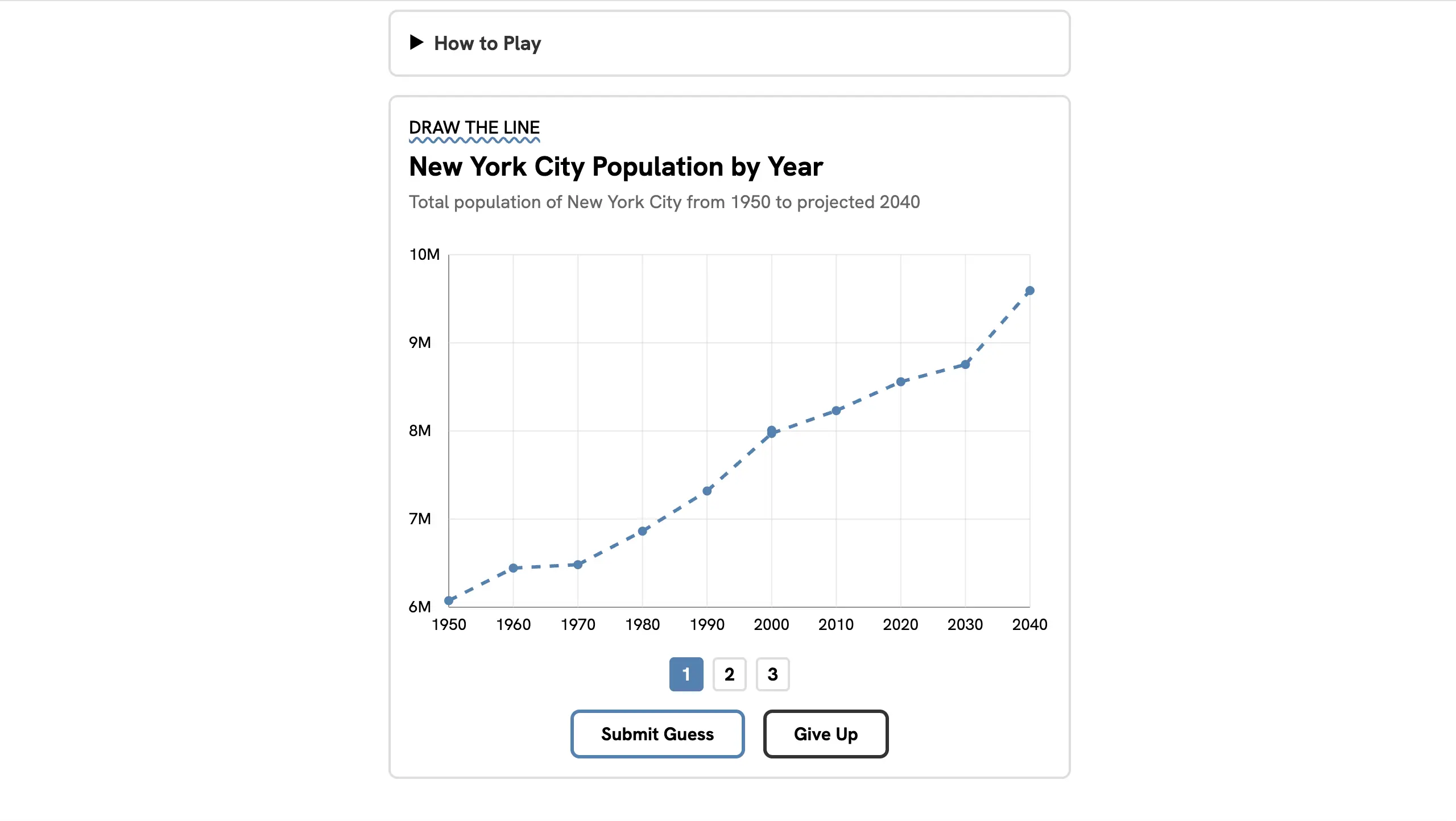
A daily game to learn more about your city using open data. Each day you get shown a new data set and either have to draw the trend or rank the boroughs.
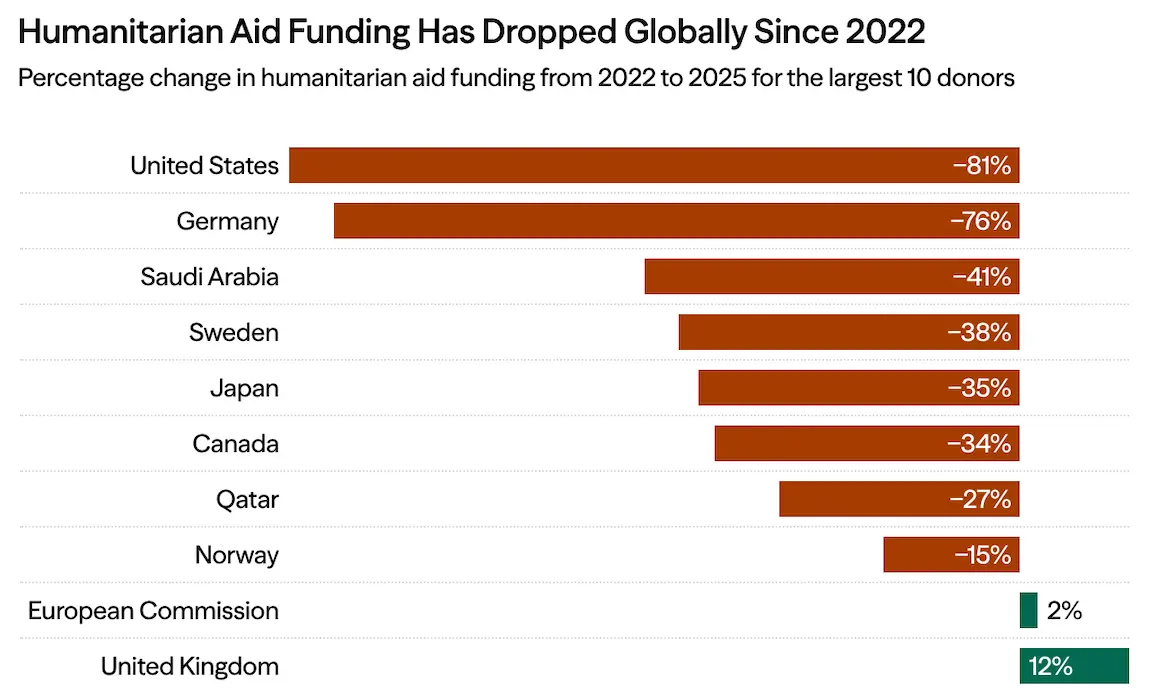
The world faces unresolved conflicts, growing climate crises, attacks on aid workers, two famines, and diminishing political will—along with significant aid cuts. Altogether, 2025 has earned a grim new superlative: the worst humanitarian year on record. Read the full article by Sam Vigersky with nine charts I helped create to illustrate the crisis.

Contributed analysis and visualizations behind this Chicago Tribune story.

A powerful, flexible Python package for entity resolution and record linkage. Enables users to load data from various sources, clean and standardize entity names and addresses, and create links between entities based on exact and fuzzy matching techniques.
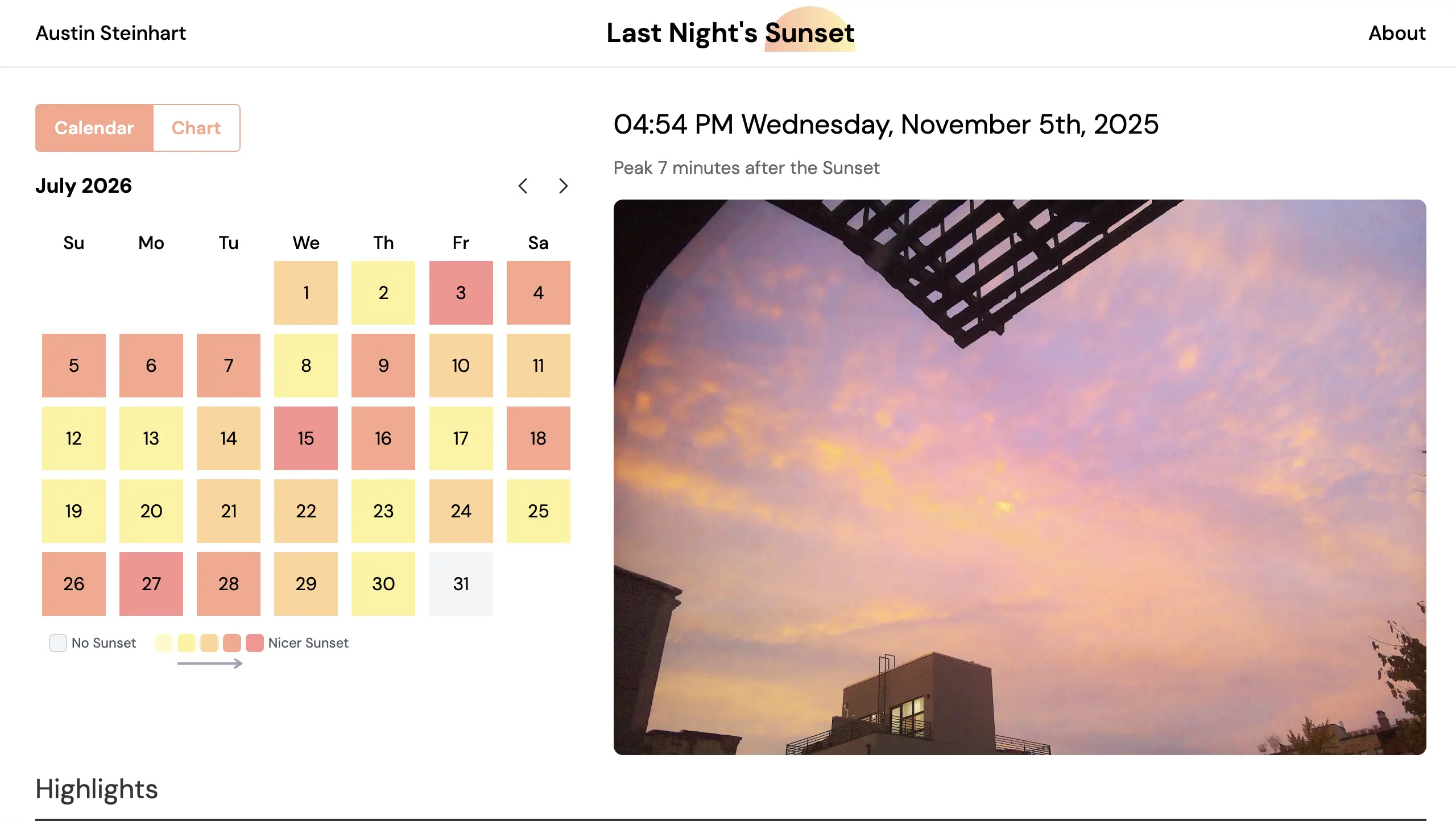
Never miss the sunset again. An automated system that captures, scores, and displays the best sunset photo from the previous night using computer vision and a Raspberry Pi.
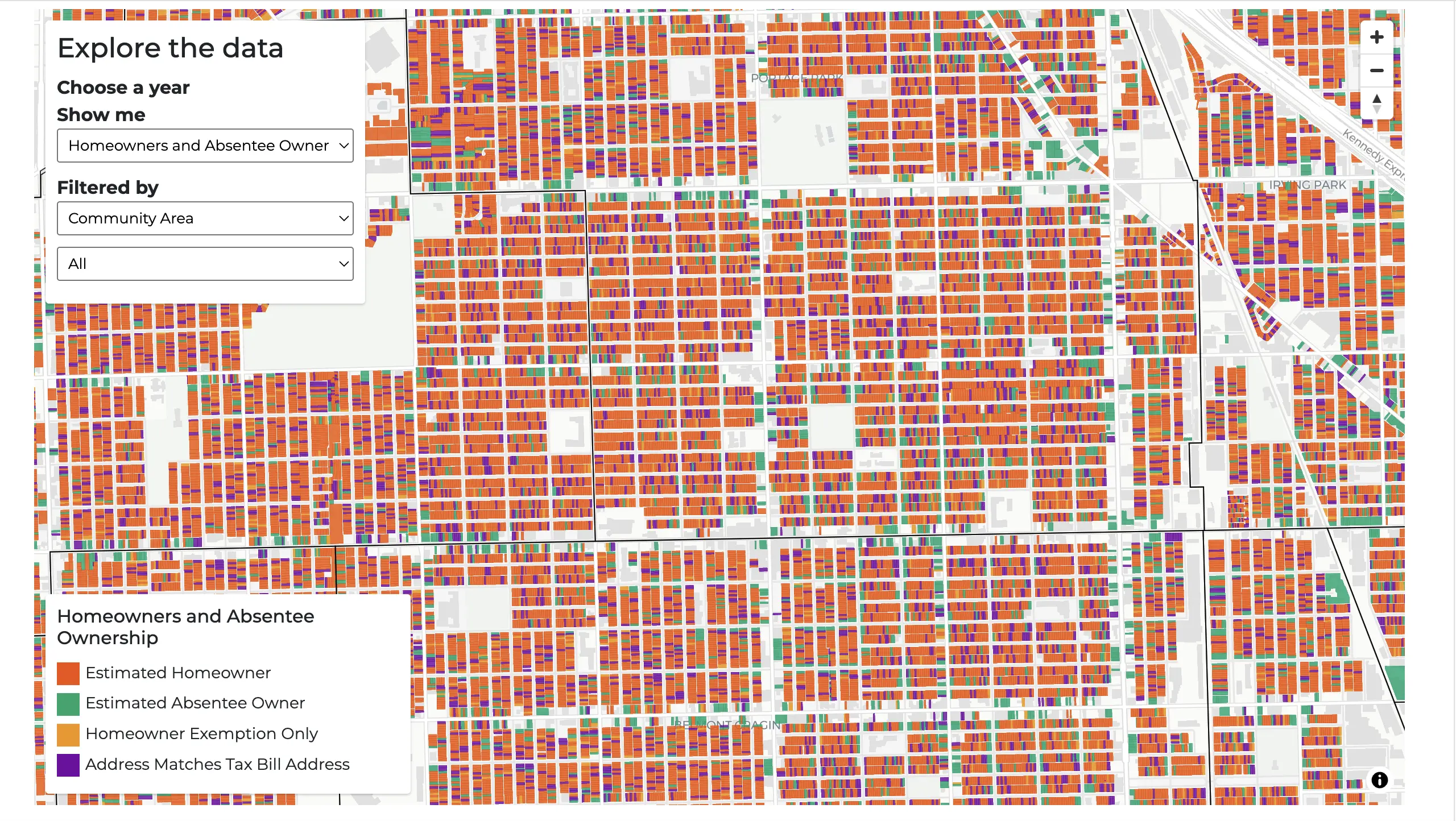
A web app that lets users identify the owner of every parcel of land in Chicago and Cook County, including a MapLibre map of 1.4M building parcels that researchers and journalists can use to explore corporate property ownership in the city.

A web app that allows a homeowner in Chicago to explore their property tax bill, including how it is calculated, what the different components are, and how it has changed over time.
In 2023, the Biden Administration released the first ever Federal AI Use Case Inventory. See how the federal government is using AI.
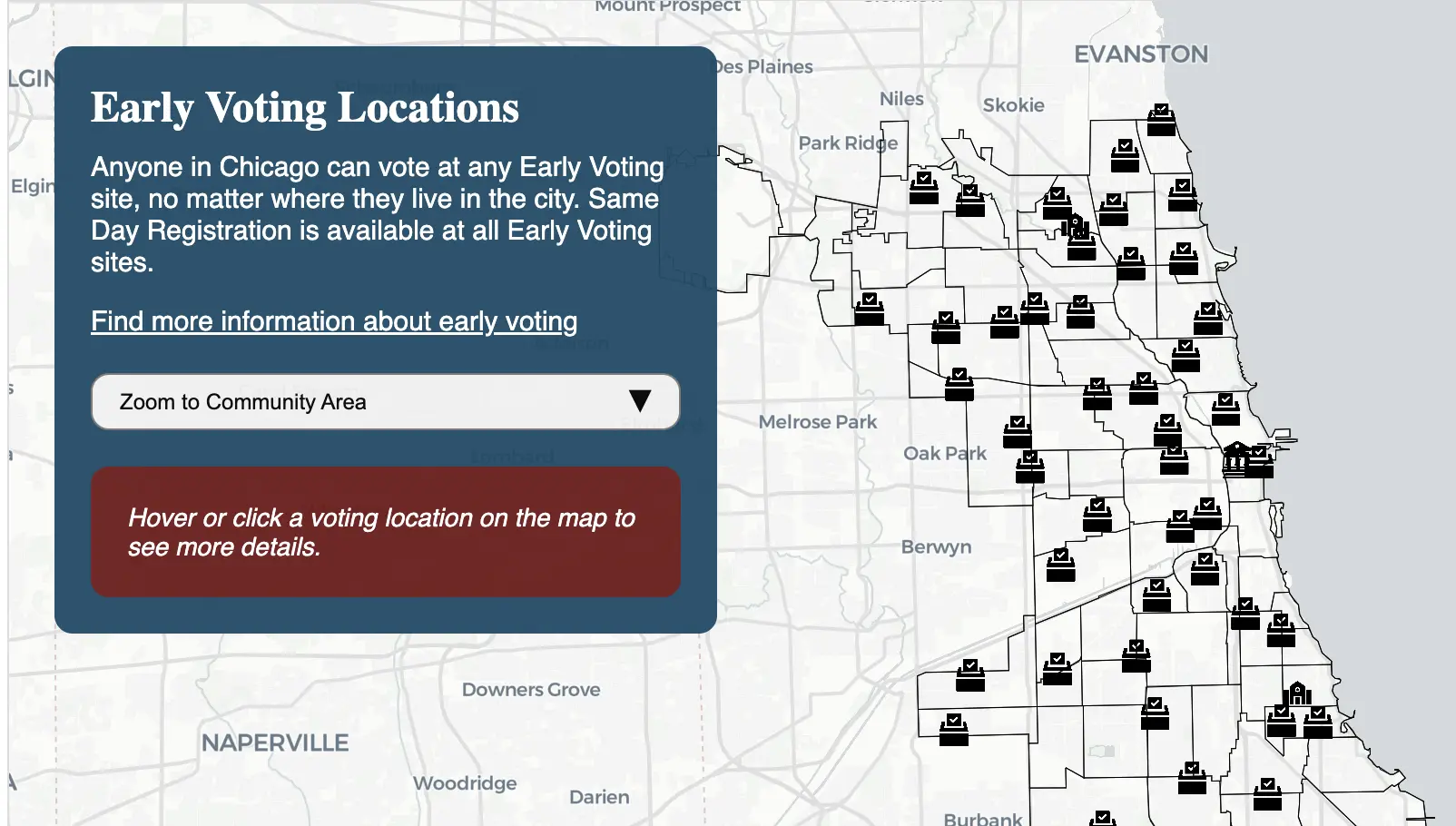
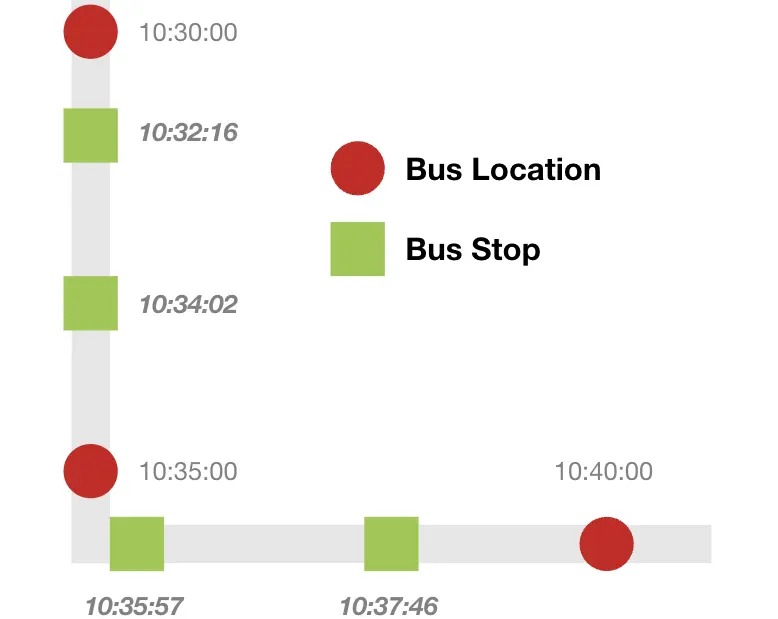
A web app for a research project that analyzed a unique dataset of over 100 million real-time bus locations in partnership with the Chicago Tribune.
An open-source collaborative tool, currently in development, that turns stories into insights. Community organizations, journalists, researchers, and community members can use it to gather stories, aggregate them, and find the common threads worth acting on.
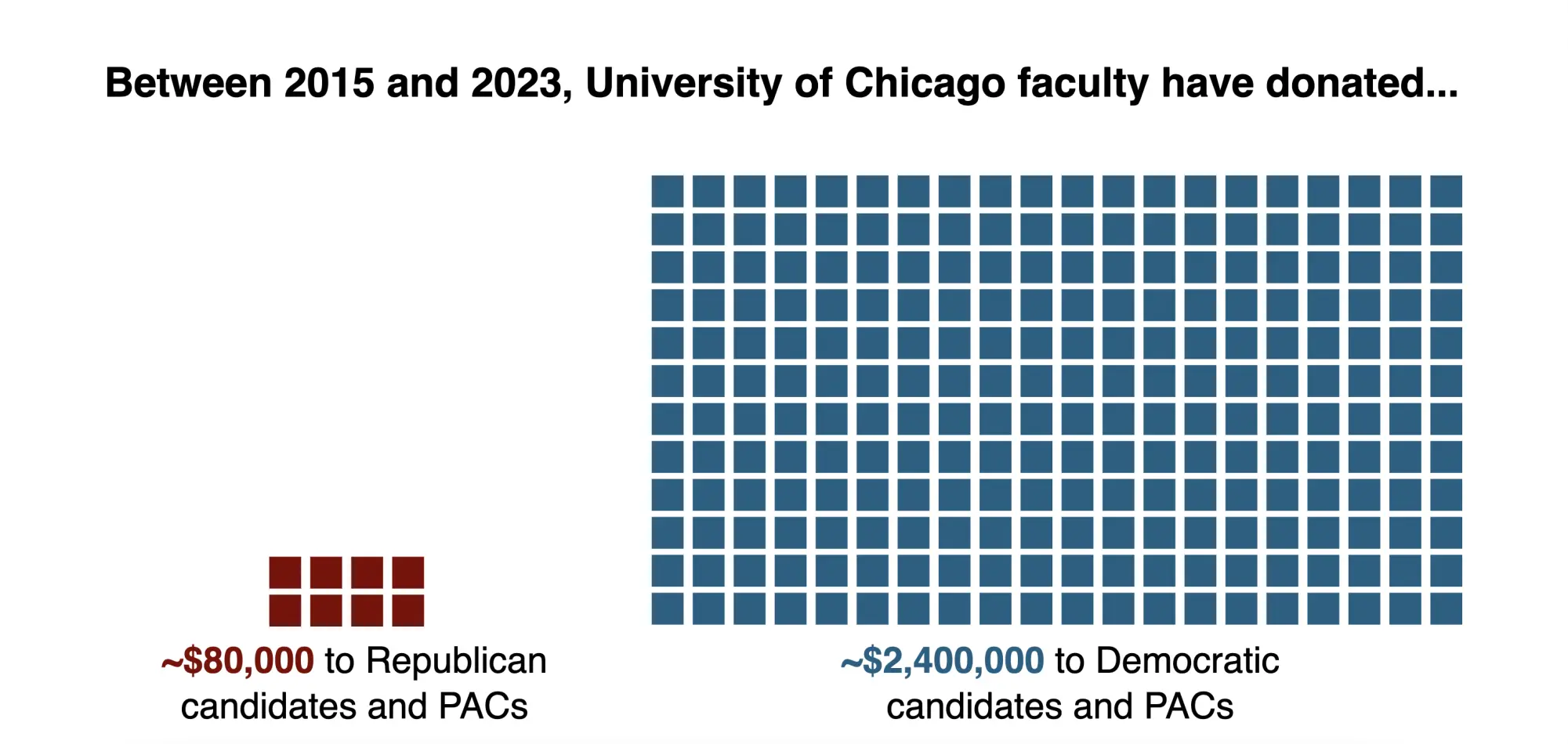
While the University has an official stance of institutional neutrality, faculty members lean decidedly Democratic. Won 1st place for Graphic Illustrations from the Illinois Collegiate Press Association.
Inspired by an interview with journalist Jamie Kalven, son of Harry Kalven, Jr. of the Kalven Report, the Maroon annotates this oft-cited but little read document.
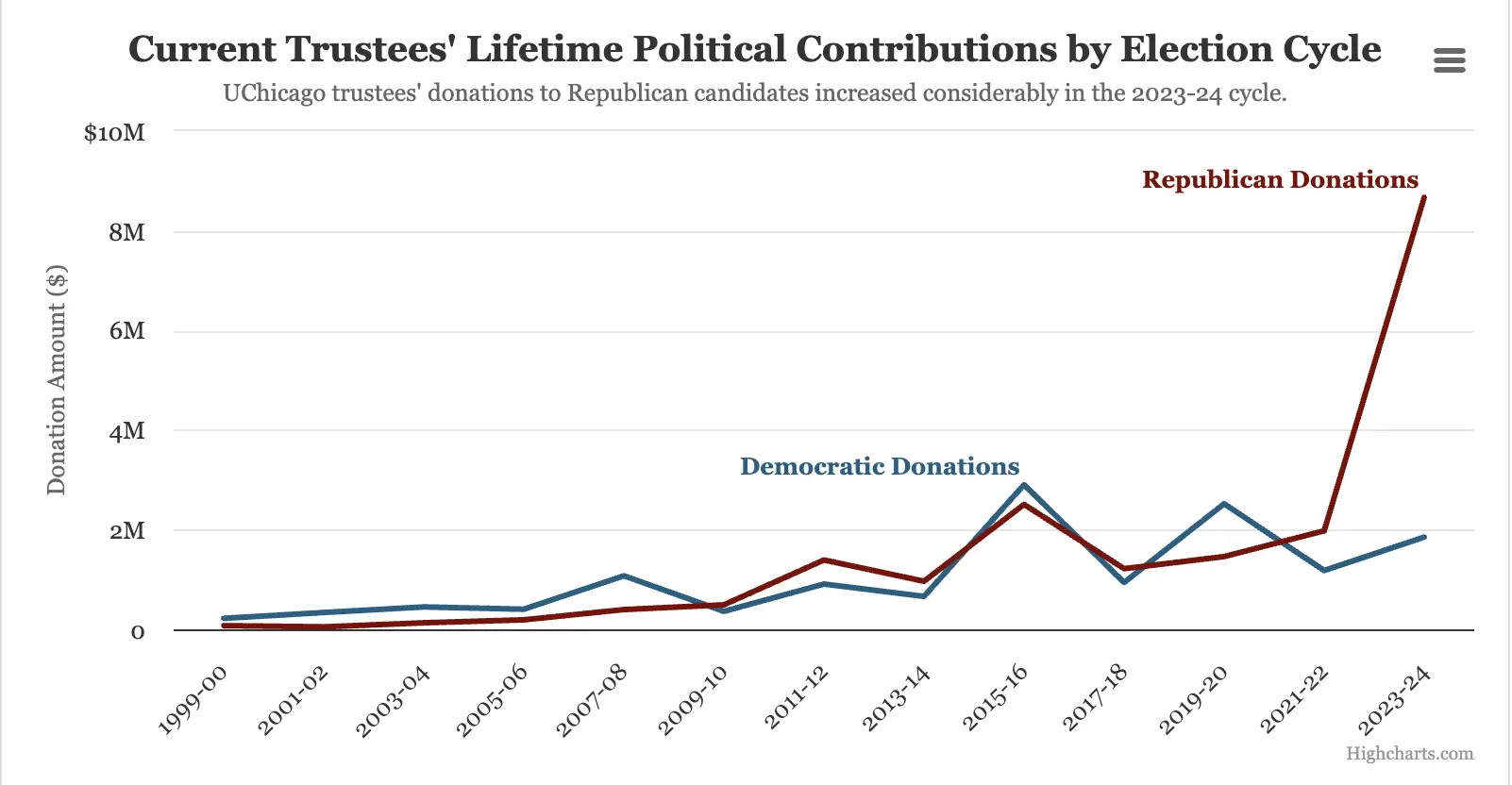
UChicago trustees’ donations to Republican candidates increased considerably in the 2024 election cycle, according to Federal Election Commission records reviewed by the Maroon.
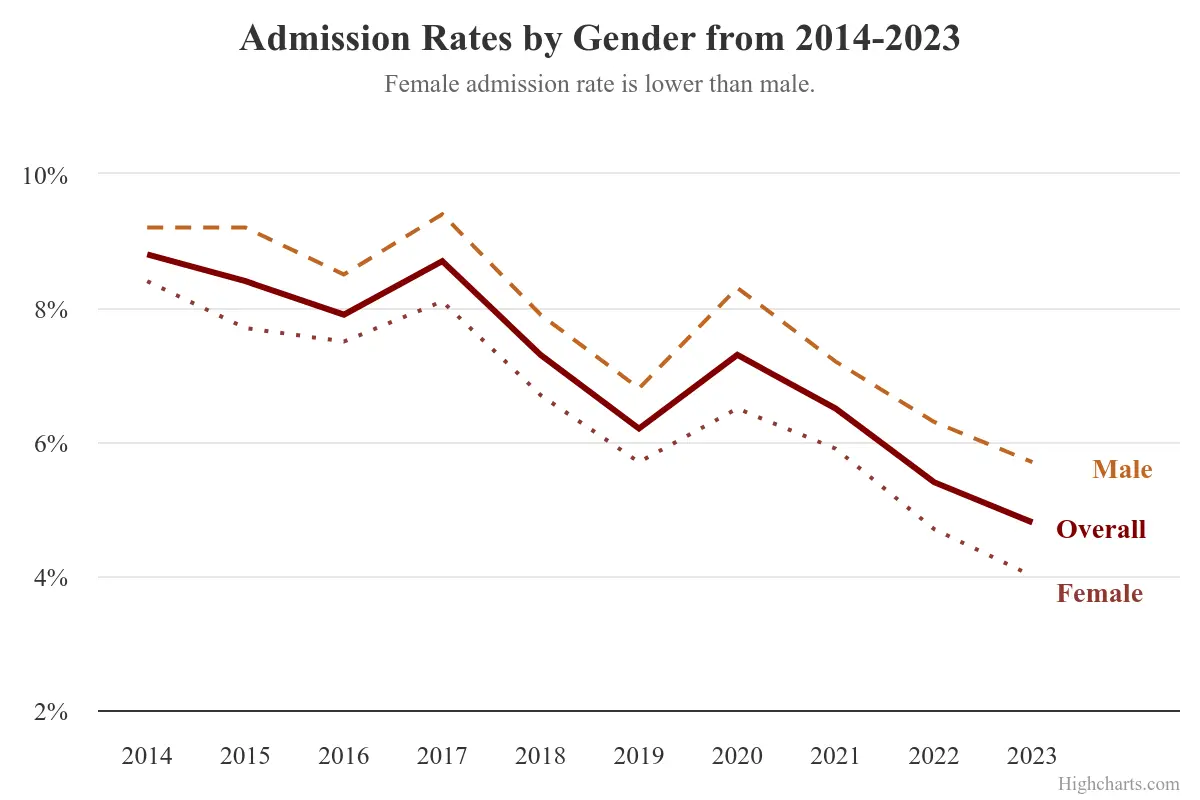
The admission rate continues to drop as campus demographics have shifted.